Conversion Optimization
April 8, 2026

Let me paint you a picture. You spend three days filming, editing, and fine-tuning a video. You post it. It blows up, tens of thousands of views, comments going crazy, people tagging their friends. You're watching the notifications roll in and thinking: this is it. This is the one that's going to convert.
Then you check your sales dashboard. Or your sign-up numbers. Or your link click data.
And it's... fine. A few hundred clicks. Maybe a couple dozen purchases if you're lucky.
What happened to the other 50,000 people? Most of them scrolled right past the words "link in bio" without a second thought.
Here's the thing nobody tells you when you're starting out as a creator: link in bio isn't a call to action. It's a detour. And detours lose people.
Link in bio became the default because creators didn't have a choice. Platforms wouldn't let you add clickable links in captions or video descriptions. So everyone landed on the same workaround: point people to your profile, and put a link aggregator there. But when your link in bio doesn’t convert or drive revenue, you have then to reconsider this approach and ask why?
It worked well enough. But "well enough" and "actually converting" are two very different things.
The numbers tell a pretty clear story. In Campaign’s article “The death of Instagram’s ‘link in bio’”, Instagram's average conversion rate sits at around 1.08% overall. [1] That includes every type of content, every type of audience, every type of call to action. For every hundred people who see your content, about one of them ends up taking action.
Now think about what that means for your business. If 50,000 people watched your video, that's roughly 500 conversions on a good day. The other 49,500? Gone. And most of them weren't uninterested, they just ran into friction before they could act.
Look, nobody's saying link-in-bio tools are useless. Linktree has over 70 million users for a reason. [5] They're great for organizing your links in one place and giving people a central hub for your content.
But there's a difference between a profile hub and a conversion tool. Link-in-bio is the former. It routes traffic. It doesn't capture intent.
What it genuinely can't do:
Think about what you're actually asking someone to do when you say "link in bio." Map it out step by step:
Those five extra steps are exactly what create link in bio conversion drop-off. On a phone screen, while the next video is already auto-playing and the viewer’s attention is being pulled in a dozen different directions. In today’s attention economy, attention is the real currency and every extra distraction costs you conversions.
"Every extra tap is hole in your social media sales funnel. Not because your audience stopped wanting your product, but because of the many other hooks waiting for them across the way."
And here's the kicker: Baymard Institute found that 18% of US online shoppers abandon purchases solely because the checkout process was "too long or complicated. [3] That's people who already had their wallet out. They'd already made the decision to buy. And the friction still killed it.
Now imagine applying that to someone who was casually watching your TikTok and hadn't even fully decided yet. The dropout rate isn't surprising. It's inevitable.
You know that feeling when you're at a concert and a song comes on that you love, and in the moment you think "I need to add this to my playlist", but by the time you get home, you've completely forgotten?
That's impulse decay. The desire was real. But the moment passed, and with it, the motivation to act fades leaving a low video conversion rate.
This is exactly what happens when you send viewers to your bio. The emotional peak of your video is right now, while they're watching. That's when they're most excited about your product. That's when they're most likely to click, sign up, or buy. The transition in which the viewer leaves the video to find your bio, their motivation drops. To turn video views into conversions, you need to capture intent at its peak during watching the video.
According to Fogg Behavior Model [7] , f the action becomes harder (extra taps, profile visit, Linktree choice), ability drops, so even if motivation is high, action becomes less likely. Every second between that peak moment and the action point is a second where excitement fades, doubt creeps in, or something else grabs their attention. By the time they've navigated five steps to your Linktree, they're in a completely different headspace than they were when the video had them hooked.
The solution isn't to make your bio link more attractive or your Linktree better organized, it's finding a true link in bio alternative like SnapScan. To stop impulse decay, you need to stop making people take that journey at all.
There’s a second layer to this that doesn’t get talked about enough, especially in creator circles.
Platforms like TikTok, Instagram, and YouTube are built to keep people watching. Their business model depends on attention. So when your content asks viewers to leave the platform too early, you’re not just creating friction for conversions, you may also be hurting the very signals that help your content get distributed in the first place.
An external link in a caption or an aggressive “go click now” CTA can interrupt watch behavior. Maybe people drop off early. Maybe they don’t finish the video. Maybe engagement dips. And those are exactly the signals these platforms care about most: watch time, views, engagement…etc [6].
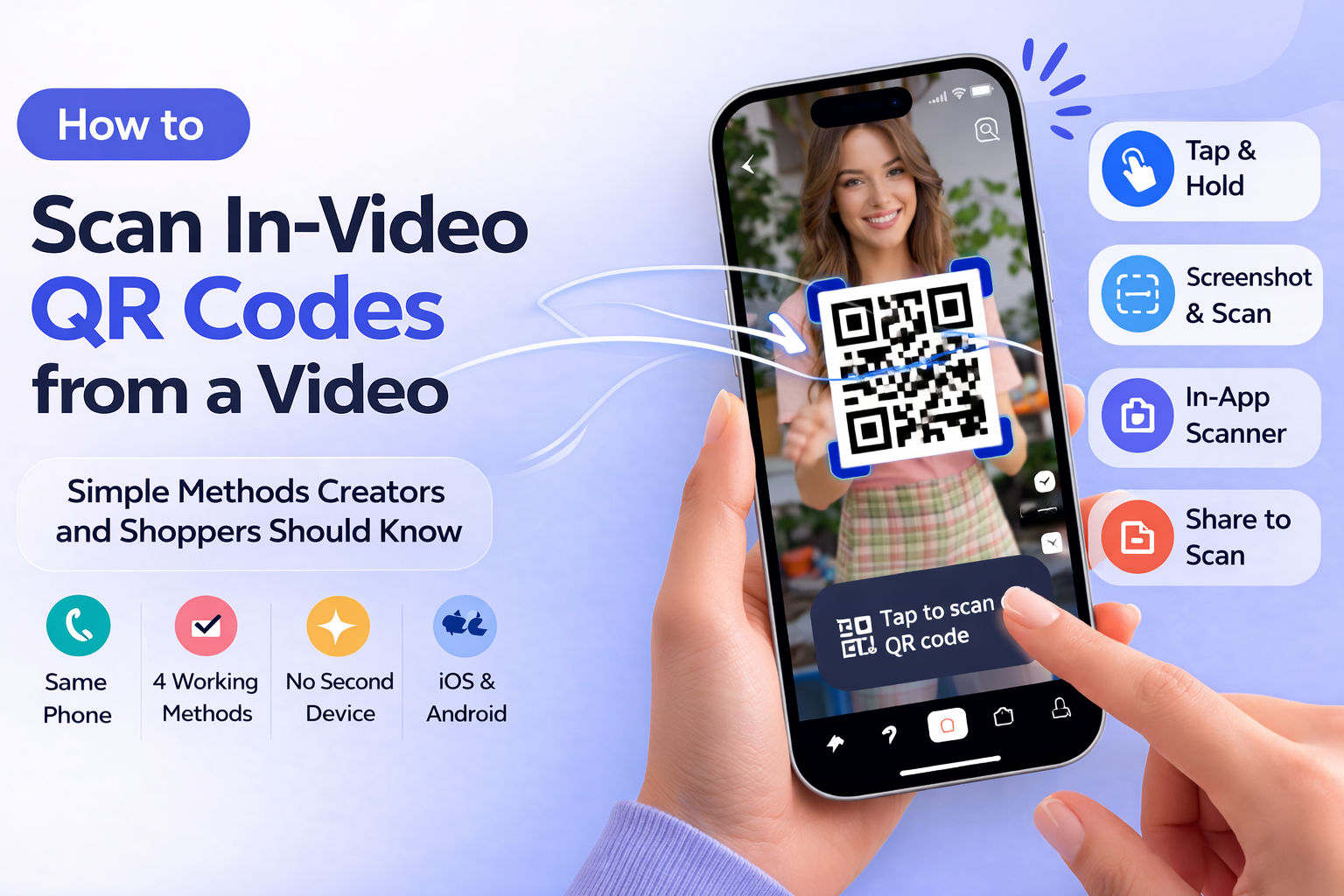
The Snapscan In-video QR codes can be a smarter workaround. There’s less friction and distracton, it takes the warm and hot audience to their destination directly, and the content can still perform like normal if the creative holds attention. You’re giving viewers a path to act without making the post feel like it exists just to send them somewhere else.
Here's the part that really stings if you're trying to build a sustainable content business.
With most of the link-in-bio tools, you often get click visibility, but not full attribution of what's actually working. You haven’t the ability to fully track social media ROI. Someone clicked a link on your Linktree, great. But which video sent them there? Was it the Reel you posted two days ago or the TikTok from last month that randomly went semi-viral? Was it the product demo or the lifestyle content?
You don't know. You genuinely cannot tell. And that means you can't make smart decisions about what to create next, where to invest your time, or what's actually resonating with your audience beyond the vanity metrics of views and likes.
For creators trying to build real revenue, this is a serious problem. For agencies trying to report ROI to clients, it's very hard to do that. Views are easy to point to but from where?!, you can’t fully tell. Is actual business results tied to specific content? Not Sure!.
If you’ve been searching for an alternative of Link in Bio and Linktree pathway that actually captures intent, here is what the SnapScan in-video path looks like before and after:
Before SnapScan, conversion path looks like this:
Video → Profile → Link Page → Destination → Action
After Snapscan in-video QR codes, it looks like this:
Video → Scan → Action
Two steps removed. The profile visit and the link page are gone entirely. The in-video QR code acts as a powerful video conversion tool that allows your audience to convert without a profile visit. And the scan happens while the video is still playing, so you're capturing people at the exact moment their interest is highest, before anything has a chance to dilute it.
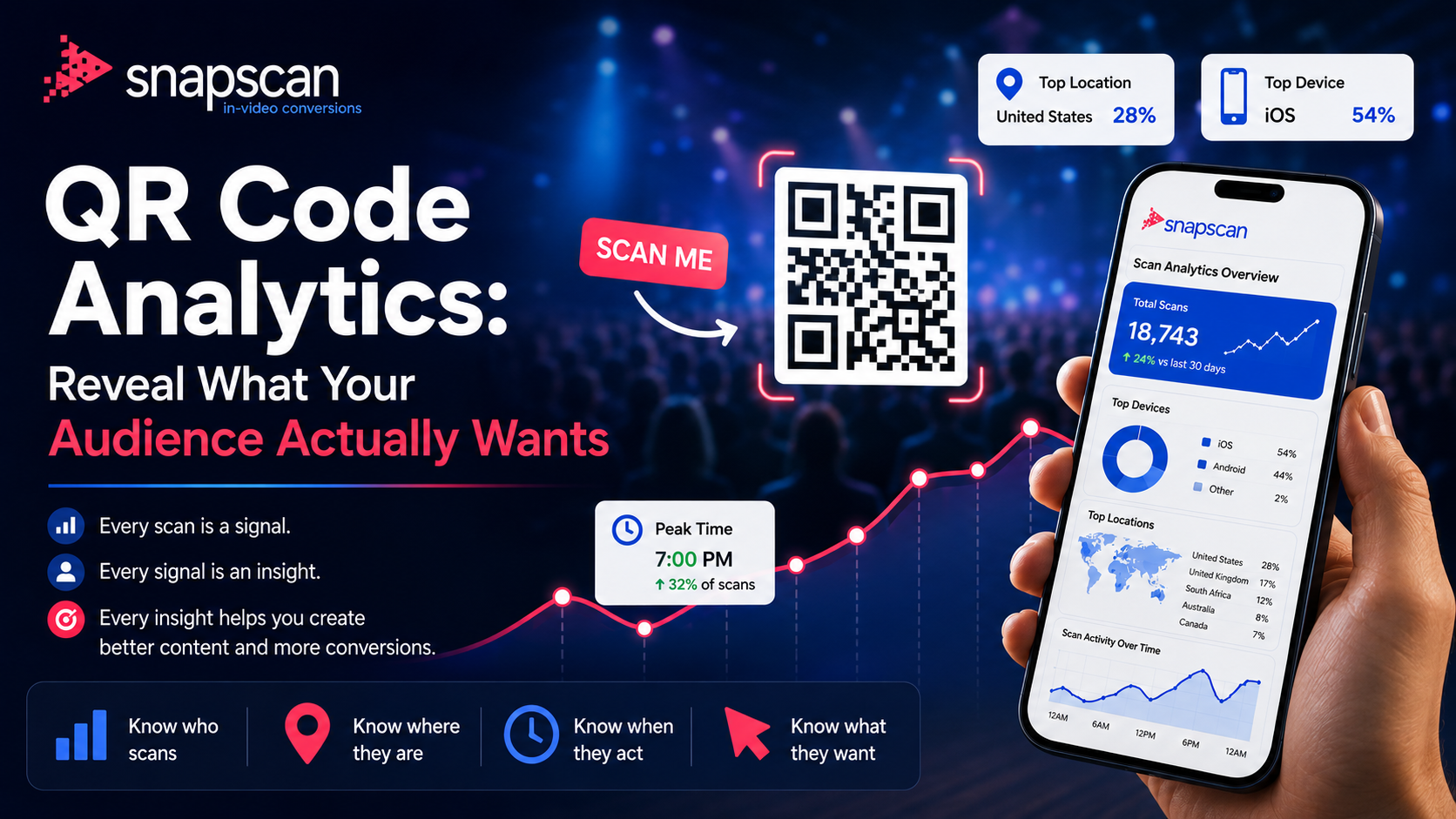
Every scan is also fully tracked and attributed. You know exactly which video drove each scan, what device they were on, where they're located, and when it happened. For the first time, you can actually connect your content to your results.
REFERENCES
[1] Campaign US, "The death of Instagram's 'link in bio'” https://www.campaignlive.com
[2] Baymard Institute, "Cart Abandonment Rate Statistics" (2024). Cited via Statista https://baymard.com
[3] Baymard Institute, "Main reasons why consumers abandon orders during checkout in the US" (2024) https://baymard.com
[4] SellersCommerce, "Shopping Cart Abandonment Statistics" (2025) https://www.sellerscommerce.com
[5] Linktree, Company overview and user statistics https://linktr.ee/about
[6] Sproutsocial “Reels algorithm ranking factors” https://sproutsocial.com
[7] Fogg Behavior Model https://www.behaviormodel.org/home
April 8, 2026

April 1, 2026