
Last Updated
June 28, 2026
How to Increase Video Conversions without Using Link in Bio
Conversion Strategy
Nobody talks about this part of content marketing.
You did everything right. You made the video. You nailed the hook. You grew the audience. You got the views. Your videos are reaching thousands - sometimes millions - of people. But when it's time to measure results, there's one thing missing: conversions.
Welcome to the “High video views but no sales" problem.
The problem isn't your content. And it's not your audience. The problem is the gap between when someone decides they want something and when they're able to act on it. That gap - the one created by the words "link in bio" - is where most of your conversions die.
The Drop-Off Chain Nobody Talks About

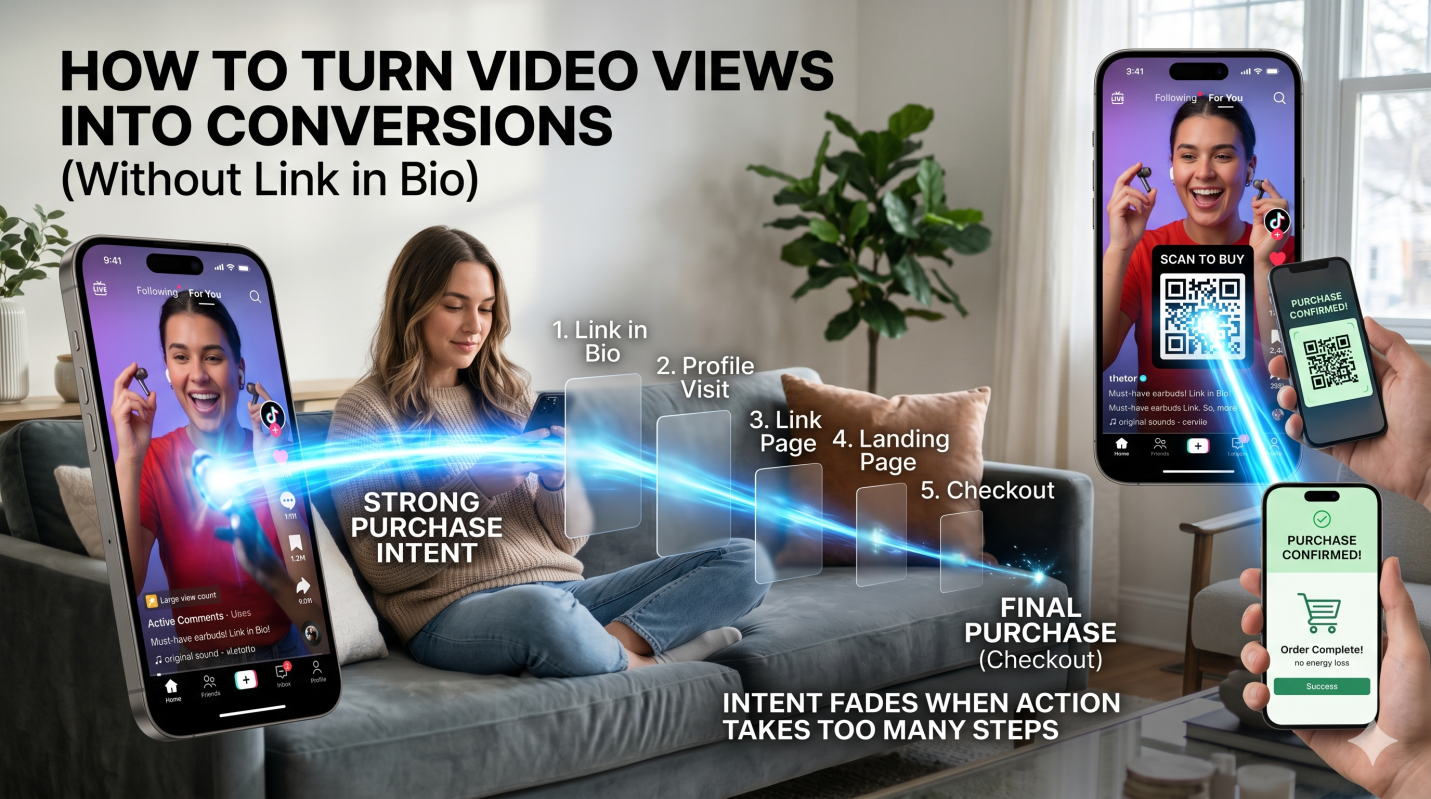
Every step in that six-step path is a place where someone can decide it's not worth it. Not because they stopped wanting what you're offering - but because the effort outweighed the impulse.
Behavioral research backs this up hard. Baymard Institute found that “18% of US online shoppers abandon a purchase specifically because the checkout process is too long or complicated”.[2] And those are people who had already decided to buy. They had their wallet out. The friction still beat them.
For social media viewers who haven't even fully committed yet? The drop-off is steeper. Research shows that when social media visitors arrive on an e-commerce site, they abandon around 91% of the time without purchasing. [3] Nine out of ten people. They came curious. The path made them indifferent.
"The funnel doesn't fail because people didn't want the product. It fails because you asked them to want it hard enough to do six things after watching a video."
Views Are Not Conversions. Here's the Gap
A view is passive. Someone watched your video for a few seconds, maybe a few minutes. Their brain processed what you showed them. They might have felt something - interest, desire, curiosity, the beginning of a purchase decision.
But a video conversion requires action. And action requires a path. Right now, for most creators, that path goes:
- Watch a video > hear the words "link in bio" > navigate to profile > tap the bio link > land on a page full of links > find the right one > take action.
Six steps to take an action. On a phone screen. Against infinite scroll, a short attention span, and the next video already loading.
Whether you’re dealing with "TikTok views but no sales" problem, Instagram Reels not converting, or YouTube Shorts traffic that doesn’t turn into revenue - the root cause is almost always the same. The path is too long and asks too much from someone who was just scrolling.
According to research on link-in-bio click behavior, TikTok discovery is largely feed-driven, which means most viewers are in a rapid scroll state and rarely tap through to a profile at all. [1] The majority of people who watch your video and feel that pull of interest will never make it back to your bio.
Why Interest Disappears Between Watching the Video and Clicking the “Link-in-bio”
There's a psychological principle at work here that marketers call impulse decay. The moment of highest purchase intent isn't when someone finds your product page. It's the moment in your video when they see the thing in action, hear the results, feel the desire forming. [5]
That's the peak. Everything after it - every tap, every page load, every navigation decision - is entropy. The interest is draining away in real time.
This is why one-click checkout exists. Why Apple Pay became a thing. Why Amazon's "Buy Now" button is designed to skip the cart entirely. Every friction-reduction move in e-commerce history is built on the same insight: the shorter the path from desire to action, the more purchases actually happen.
Link-in-bio was built before TikTok was first released. It was designed for a world where people calmly browsed a creator's profile and clicked through thoughtfully. It was never designed for the full-screen, rapid-scroll, mobile-first reality of TikTok and Reels in 2026. For content creators, influencers, and anyone doing affiliate marketing or social selling, this gap is the single biggest drag on creator monetization.
What “Turn Video Views Into Conversions” Actually Requires
If you want to close the gap between views and conversions, you need to answer one question: where does the action happen?
Right now, your answer is: after the video, somewhere else. The profile. The link page. The destination.
- The better answer is: inside the video, while it's playing.
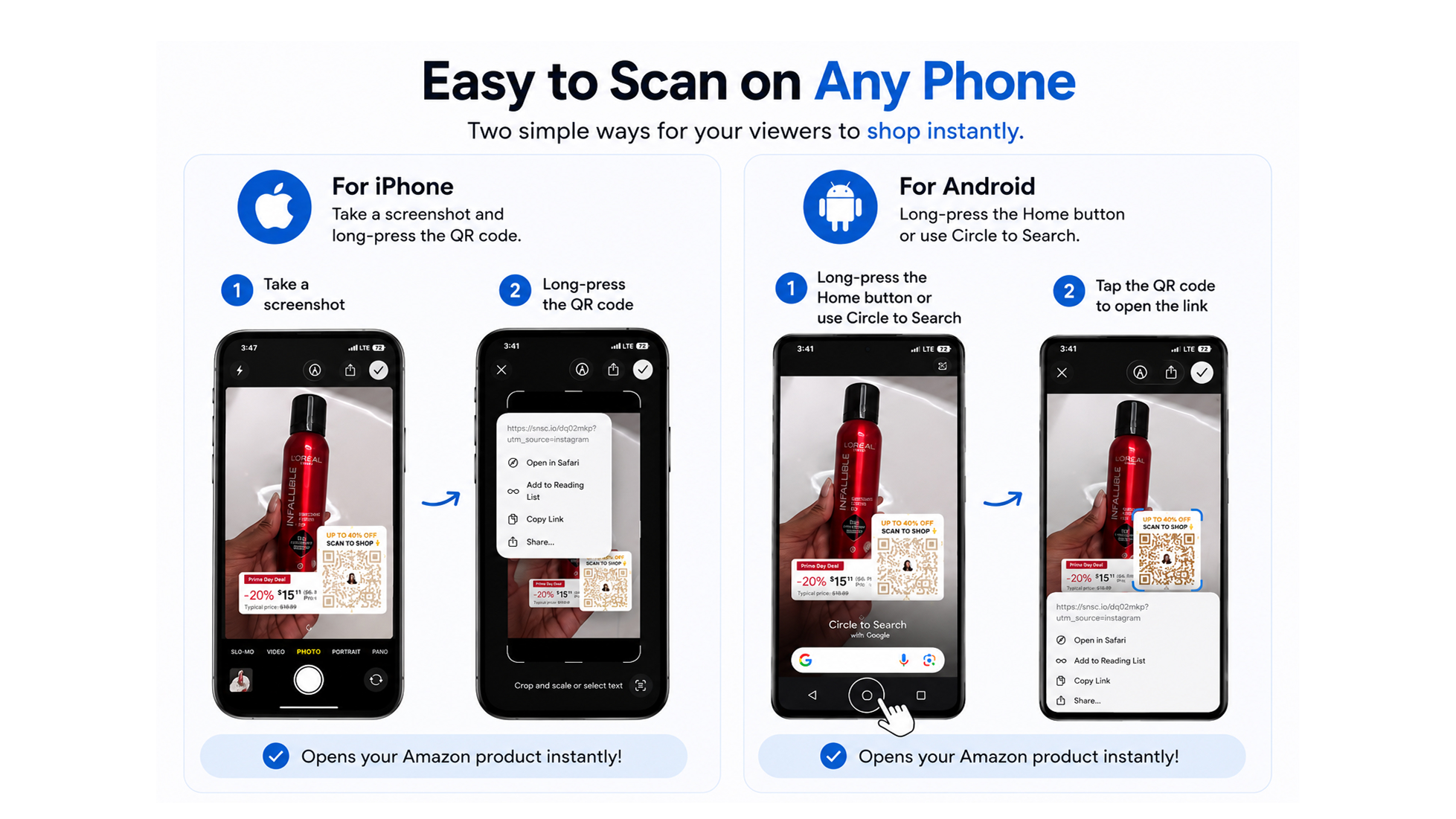
The mechanism is straightforward. You embed an in-video QR code in the video itself - visible on screen, placed in a spot that doesn't get covered by the platform's UI. The viewer sees it, scans it with their camera, and lands directly on your product page, opt-in, booking link, or checkout.
No navigation. No bio. No link page. The video is still playing when they land on your destination.
You can explore how this works across every platform on the SnapScan features page, or see how other creators are using it to convert views into revenue.
That's what it means to turn video views into a real-time conversions (not to hope that the view eventually becomes a click somewhere else) and to capture the action at the exact moment the interest is highest (not just hope to increase video sales after the moment has passed).
If you’ve been searching for a real answer to how to get sales from video content, this is it: close the gap between the moment of interest and the moment of action. Don’t ask people to travel five steps to get there.
The “Scan-During” Model vs. The “Click-After” Model
Let's put both models side by side.

The “scan-during” model doesn't require better content or a bigger audience. It requires capturing the same attention you're already generating, at the moment it already exists, instead of asking people to carry it somewhere else and hope it survives the trip.
Why YouTube Shorts Have a Conversion Problem
YouTube Shorts has a specific version of this problem worth naming. Shorts descriptions don’t support clickable links, and comments don’t either. That means creators posting on Shorts have even fewer options than on TikTok or Instagram. You can tell viewers to “check the link in bio” - but on YouTube, the bio is buried several taps deep in a profile most viewers never visit. The channel subscription model means most Shorts viewers are non-subscribers who found the content through discovery, not loyalty. They have no reason to navigate anywhere after the video ends.
An in-video QR code is currently one of the only ways to get a YouTube Shorts viewer to take action on the spot - because the code lives inside the video frame itself, not in a description or comment that most people never open.
How It Works in Practice
Here's what the actual workflow looks like with a tool like SnapScan:

A real life example is a fitness creator promoting a protein shaker on YouTube Shorts. Typically, viewers are directed to a profile link after the video ends. With SnapScan, the QR code appears in the frame during the product demonstration - viewers scan while the shaker is right in front of them, and land directly on the product page while the video is still playing. The moment of desire and the moment of action happen at the same time. That’s the difference between a video views no sales situation and one that actually converts.
Also, another useful feature is that SnapScan's in-video QR codes are dynamic, which means you can change the destination after the video is already posted. Run a campaign for a month, then redirect the same QR to a new offer without re-editing anything.
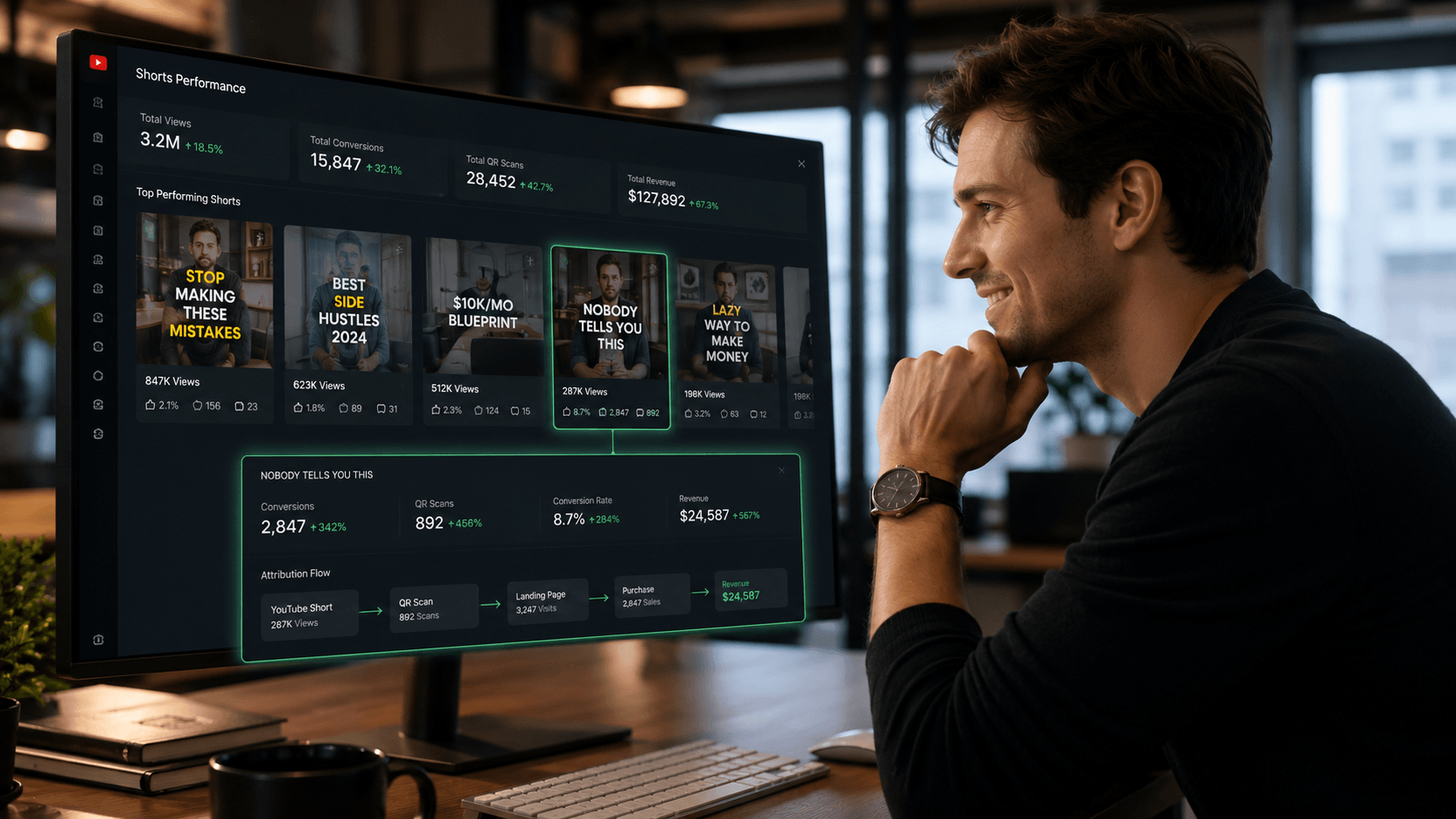
What Can You Track with In-Video QR Conversions?
This is the part that changes how you make content decisions going forward.
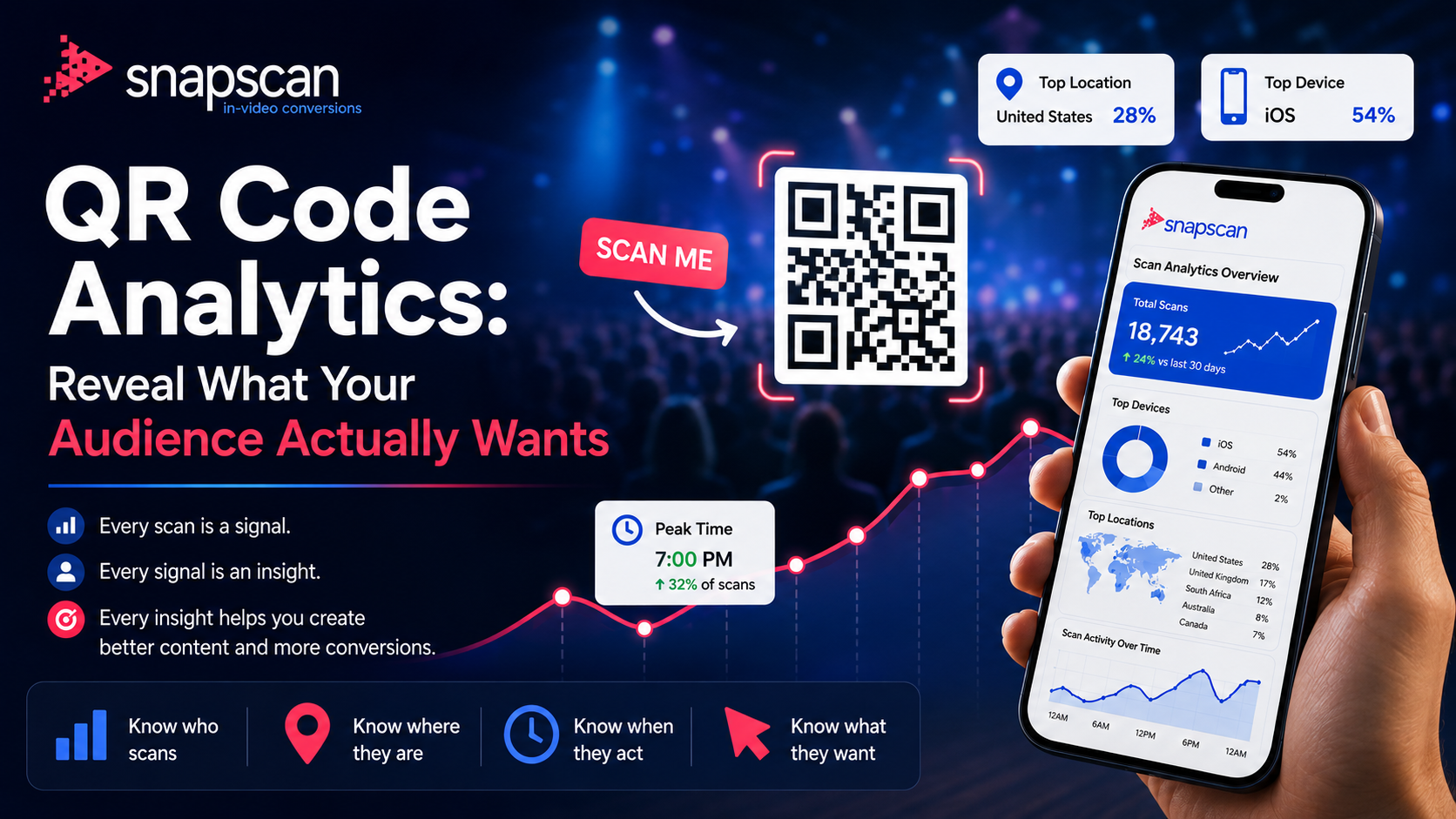
With link-in-bio, you can tell someone clicked a link. That's it. You don't know which video motivated them. You don't know what content drove the action. You're flying blind on what to make more of.
When conversion happens inside the video, every scan is attributed to its source. You know which specific video drove each scan. Which platform it came from. What device the viewer was on. What time of day they scanned. Whether a campaign drove more scans than another.
For creators trying to build real revenue, this changes everything. You stop guessing what works. You start knowing.
Where In-Video QR Codes Work Best
Not every video has the same conversion goal, but in-video QR works across more use cases than most creators expect. Affiliate marketing creators can link directly to a product during the review itself, capturing the purchase intent before the video ends. Digital products and courses work well because the desire to learn is highest during the educational content itself. E-commerce brands showing products in action can turn the demonstration moment into a direct sale.
Coaching and consulting businesses can link to a booking calendar, capturing leads at the exact moment a viewer decides they want help. Real estate agents can let viewers scan during a property tour to book a viewing instantly. Events and SaaS demos can drive signups and registrations the same way - by putting the action inside the moment that created the interest. See how creators across industries use SnapScan.
SnapScan has a free tier you can start with today. Check the pricing plans to see which tier fits your current volume.
Turn your next video into a conversion.
Try SnapScan free at snapscan.link
REFERENCES
[1] Tapmy - "Link in Bio Click-Through Rate Benchmarks by Platform" (2026) https://tapmy.store/blog/link-in-bio-click-through-rate-benchmarks-by-platform-2026-data
[2] Baymard Institute - "Cart Abandonment Rate" (2024). Cited via Statista https://baymard.com/lists/cart-abandonment-rate
[3] SellersCommerce - "Shopping Cart Abandonment Statistics" (2025) https://www.sellerscommerce.com/blog/shopping-cart-abandonment-statistics/
[4] Campaign US - "The death of Instagram's link in bio" (July 2025) https://www.campaignlive.com/article/death-instagrams-link-bio/1926089
[5] Riotrend – Impulse Decay https://riotrend.com/blogs/blog/what-is-impulse-buying?srsltid=AfmBOoop8kOrpW3hgntMTUDJEorkvNu6JCba8QjT2p8xtNa99qMBW7KC
Related Blogs
Analytics & Attribution
August 12, 2026
YouTube Shorts Conversion Tracking: Know Which Video Drives Sales